
A manufacturer of premium dog and cat food from Lublin has been ordering three types of packaging from us for two years: can trays in a size matched to its own product, boxes made of B-flute board for shipments from its online shop, and larger printed die-cut packaging. The 230 × 150 × 30 mm tray holds six cans in a 3 × 2 layout and, together with shrink film, forms a multipack for shops. It is assembled without glue, arrives flat, and we deliver it to Lublin with our own transport – once a month on average.
We do not give the company’s name or the customer’s brands. Status as at November 2026.
The customer described operates in Poland. Delivery within 24 hours of call-off applies to our own transport within Poland; to customers abroad we ship pallets by freight forwarder or as a full truckload, and the delivery schedule is agreed in the quotation.
The case in brief
| Customer | manufacturer of premium dog and cat food, Lublin; sells through shops and its own online shop |
|---|---|
| Before | a standard catalogue tray – the cans had too much play in it and shifted |
| After | a made-to-size tray, 230 × 150 × 30 mm (external dimensions), for 6 cans in a 3 × 2 layout, assembled without glue; a second, larger tray size |
| Other packaging | boxes made of B-flute board for shipments from the online shop; larger printed die-cut packaging |
| Delivery model | orders in the normal way, once a month on average; delivered to Lublin with our own transport |
| Since when | for two years |
The customer: canned pet food, shops and its own online shop
The customer makes premium food for dogs and cats, including canned food. It has two sales channels and each needs different packaging. Shops receive multipacks: six cans on a tray, shrink-wrapped. Customers of the online shop receive parcels in shipping boxes. The company orders all three types of packaging from one supplier, in one rhythm.
The starting point: the catalogue tray did not fit the can
Catalogue trays are made in popular sizes, while cans have diameters and layouts that depend on the manufacturer. In a standard tray the customer’s cans had too much play and shifted. The point of a multipack is for the cans to stand tightly, in an even layout, with the tray giving the film a flat, rigid base. A loose tray does not provide that, even when the cans ‘fit’.
The solution: a tray in a size you will not find in catalogues
We made a tray for the customer’s cans: 230 × 150 × 30 mm external dimensions, for six cans in a 3 × 2 layout. This size is not widely available, but it follows directly from the product. The low, 30-millimetre wall surrounds the lower part of the cans, and shrink film binds the whole together – the tray and the film together form a single multipack, ready to be sent to the shop.
The tray is assembled without glue: locking tabs slot into slits in the base. The customer folds it by hand at the packing station, with no glue and no additional machine. It also orders a second, larger tray size – on the same principle: the size follows from the product, not from the catalogue.
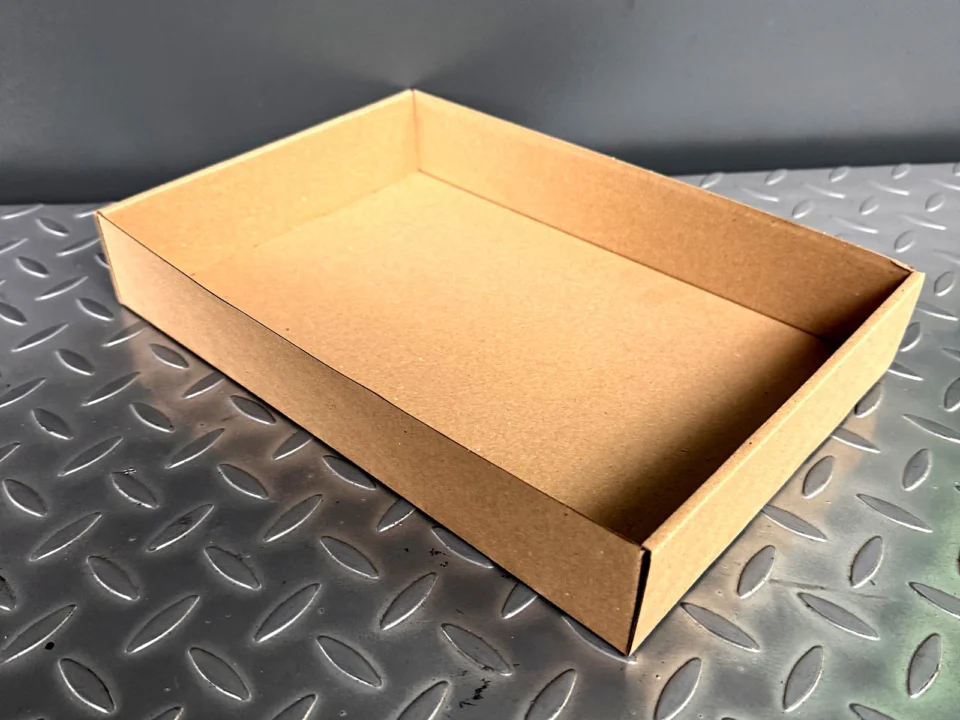
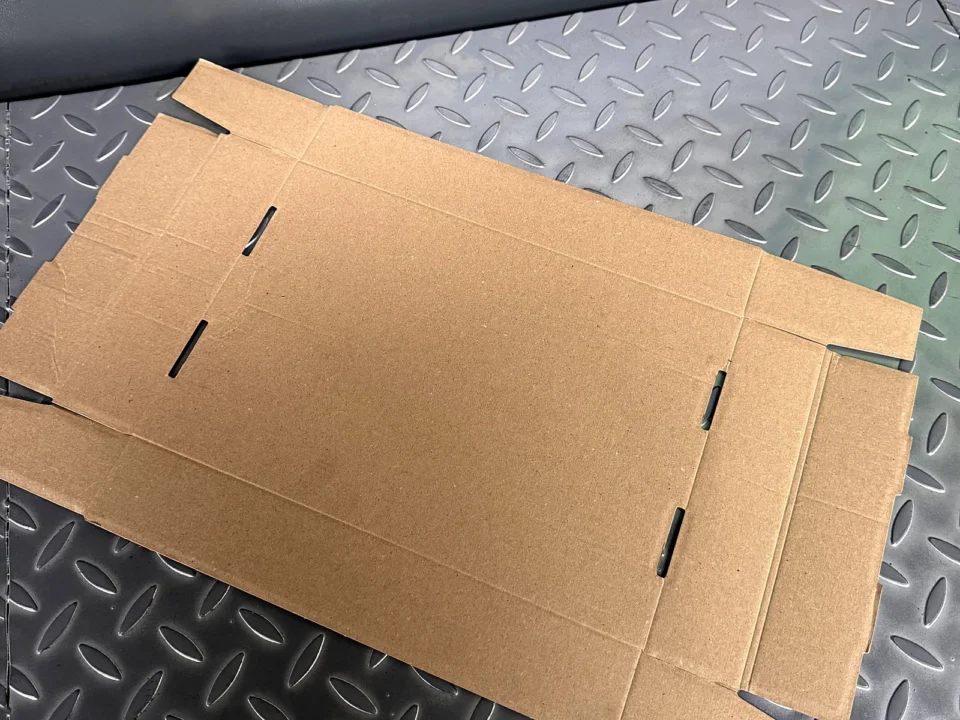
An unusual size does not mean a complicated project: a made-to-size tray uses the same technology as a catalogue tray, except that we work out the dimensions from the can, not from a table.
Boxes for the online shop and printed die-cut packaging
For shipments from its online shop the customer orders boxes made of B-flute board, and the larger packs are printed die-cut packaging. A die-cut box (cut to shape with a cutting die) can be designed to fold quickly and close without tape, and the print carries the brand onto the outside of the parcel. More about these solutions: e-commerce boxes, die-cut packaging and printing on boxes.
Deliveries: a normal rhythm, our own transport
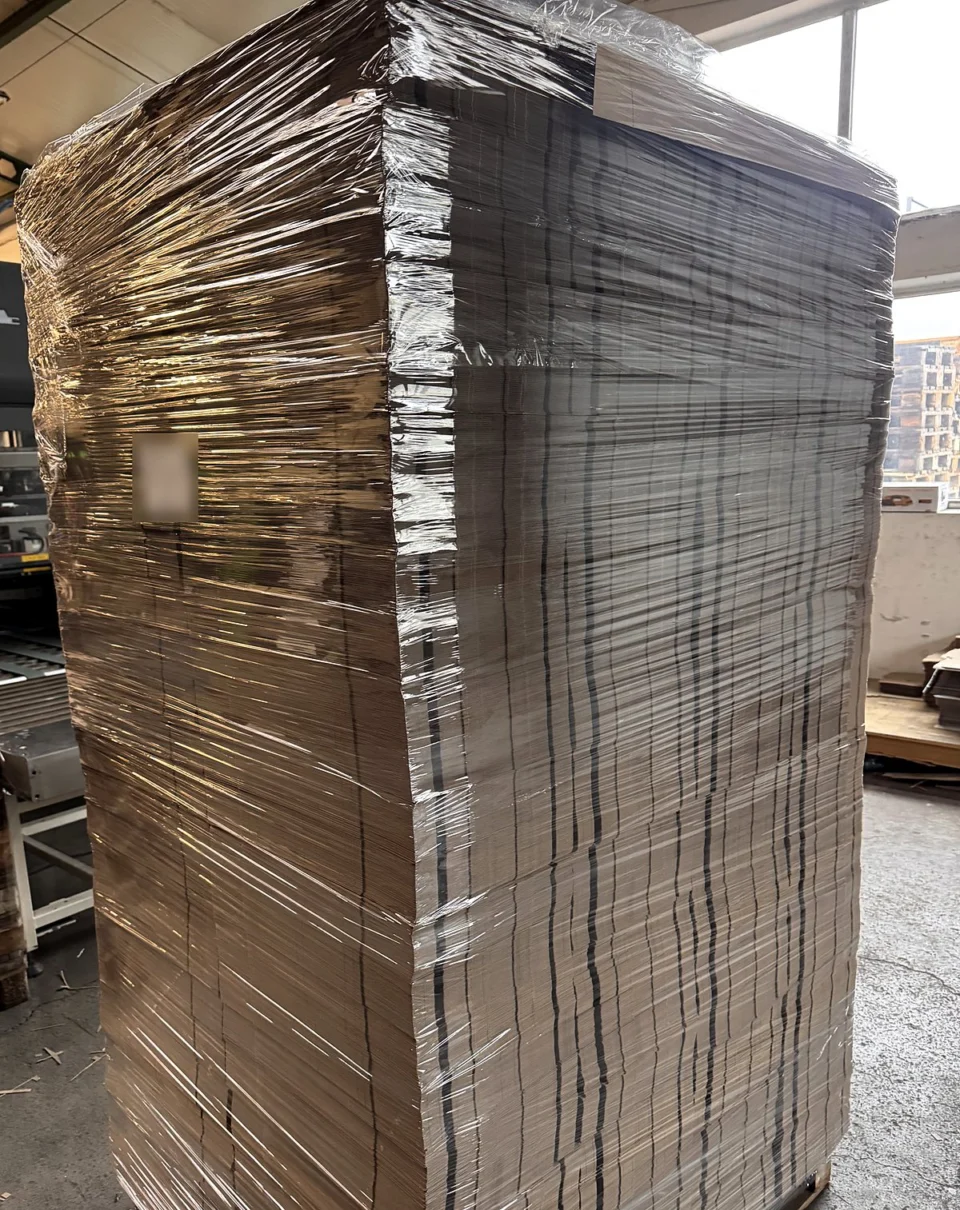
This cooperation needs no special delivery model. The customer orders as required, once a month on average, and we fulfil the orders in the normal way – usually within 7 days (max. 16 working days). We deliver the packaging to Lublin with our own transport, and delivery within Poland is free of charge. The tray blanks travel flat, on pallets, so until they are assembled they take up little space at the customer’s site.
No breakthrough – and that is a result too
In the previous case studies we described what did not work the first time. Here there was no such moment: the tray fits the cans, is assembled without glue, and for two years the orders have run in a normal rhythm. For a food manufacturer that is good news – an unusual tray size need not mean a long project or delivery problems.
What to look out for when ordering can trays
- Measure the can and state the layout. The diameter, the height and the number of cans in a row (e.g. 3 × 2) determine the tray size – see our guide to internal and external box dimensions.
- Say whether the dimension is internal or external. With trays the difference is the board thickness on each side – with a tight can layout it matters.
- Decide on the wall height. A low wall with shrink film is a different pack from a high tray without film.
- Agree the assembly method. A glue-free tray, folded by hand, needs no machine; at large scale it is worth discussing machine erection.
- Check a sample on your own line. Before the production run we will prepare a sample – in the packing area and in the shrink tunnel you can see straight away whether the layout is right. More: packaging design and prototypes.
Other case studies from our practice: a staged change of box supplier, boxes for an automotive online shop and corrugated inserts instead of foam.
Frequently asked questions
Does a can tray have to be glued?
No. The tray described in this case study is assembled without glue: locking tabs slot into slits in the base, and the customer folds it by hand at the packing station. It arrives at the customer flat, on pallets.
Can I order a tray in a size that is not in the catalogues?
Yes. We make trays to size – in this case study the external dimensions of 230 × 150 × 30 mm follow directly from the customer’s cans. We match the run to your needs – we also produce short runs and prototypes. If a design requires a minimum quantity, we state it in the quotation.
How does the tray work with shrink film?
The tray provides a flat, rigid base and sets the cans in an even layout, while the shrink film wraps the whole and binds it into a single multipack. The choice of film and shrink settings belongs to the packing line, so before the production run it is worth testing tray samples on your own line.
How often do trays need to be ordered?
As often as your production requires. The customer described orders as required, once a month on average, in the normal way. We usually fulfil orders within 7 days (max. 16 working days) and prepare a quotation within a few hours on working days.
Do you deliver packaging to Lublin?
Yes – we deliver packaging to this customer in Lublin with our own transport. Delivery within Poland is free of charge.
Need a tray for your own product?
Send us the dimensions of the product or the unit pack and the layout you need – we will propose a design and prepare a quotation within a few hours on working days.
Kartoniki.eu (LOFREE Sp. z o.o. sp. k., Lubartów, Poland) is a manufacturer of corrugated board packaging: we have been manufacturing in-house since 2019, in a production hall of over 3000 m², for several hundred companies. More about the company: about Kartoniki.eu.
